

Process operator: the work, the crew, how to get on
Updated
The Good
Operators watch the gauges so everyone else can sleep. It is patient, serious work, and the crew leans on the person on the board.
- They operate or control petroleum refining or processing units, including pumping systems and tank gauging. 3
The work keeps coming: BLS projects employment to shrink 1.9% from 2025 to 2035, with about 2,700 openings a year 2
Is it for you?
You fit if you can stay alert through a night shift, follow written procedure exactly and speak up when a reading looks off. Calm under pressure is the whole job.
A day on the crew
A typical day as crews describe it. Every outfit runs its own way.
- Shift turnover first. You read the log and talk with the operator going home.
- Rounds through the unit: gauges, pumps, leaks, smells and sounds.
- Time on the board, watching readings and making small moves.
- Permits and support for maintenance crews working in the unit.
- Write a clean log so the next shift knows exactly what you know.
Shift work is hard on a family calendar, and good operators plan their home life around the rotation.
The Brutal
Shift work, nights and holidays, and a board you cannot look away from. A turnaround pulls everyone in for long days.
- 76% of surveyed workers report daily exposure to hazardous conditions and 87% work outdoors in all weather. 3
- 62% report a typical work week of more than 40 hours. 3
Crew safety talks for this trade: electrical and lockout · PPE. Free, with a printable sign-in sheet.
Greenhorn mistakes
- A thin handover, so the next shift is guessing.
- Assuming a valve is where the drawing says it is.
- Walking rounds without really looking.
Hard lessons
A new operator who makes a wrong move and reports it right away earns more trust than one who hides it. Owning a mistake fast keeps people safe. That habit is the whole job.
The Paycheck
The spread: 10% of petroleum pump system operators, refinery operators, and gaugers earned under $57,110, 10% over $115,880 1 BLS does not publish starting pay, overtime or per diem, so neither do we. Get the rate and travel terms in writing.
U.S. pay, BLS OEWS May 2025 national estimatesOccupation · Median. Tap a row for the rest.
Petroleum pump system operators, refinery operators, and gaugers$96,710 ($46.50/hr)
- Median
- $96,710 ($46.50/hr)
- Bottom 10%
- $57,110
- Top 10%
- $115,880
- Jobs
- 33,160
- Code
- SOC 51-8093
Base wages 1
Where the pay runs highest
Top five states by median wage, BLS OEWS May 2025State · Median · vs U.S. median. Tap a row for the rest.
Alaska$124,530 · +29%
- Median
- $124,530
- vs U.S. median
- +29%
- Jobs
- 370
Louisiana$106,640 · +10%
- Median
- $106,640
- vs U.S. median
- +10%
- Jobs
- 3,490
Utah$105,980 · +10%
- Median
- $105,980
- vs U.S. median
- +10%
- Jobs
- 600
Ohio$105,150 · +9%
- Median
- $105,150
- vs U.S. median
- +9%
- Jobs
- 800
New Jersey$104,540 · +8%
- Median
- $104,540
- vs U.S. median
- +8%
- Jobs
- 420
Of 42 ranked 1
How to Get In
Ask the plant how it trains operators and whether it hires for turnarounds.
Crews hire who they know. Here is how to get known and get hired.
What the foreman wants to see
- Your logs are clear and complete.
- You ask before you move something you do not understand.
- You speak up when something looks wrong, even at 3 in the morning.
Before Monday, ask what the job needs: a license or permit, a safety card or site orientation, a drug screen. Gear: the Day One checklist.
- Usually a high school diploma or GED with a few days to one year of on-the-job training. 3
Apprenticeship sponsors
DOL lists 0 sponsors matched to this trade by name, most in Alaska 0, Alabama 0, Arkansas 0, Arizona 0, California 0. A place to start calling, not a job count 5
The path to owning your own outfit
Few process operators go out on their own; the work lives inside plants. The path up is usually lead operator, then shift supervisor. The full steps are on crew to owner.
Jobsite words
- The board
- The control room screens operators watch.
- Rounds
- Walking the unit to check equipment by eye and ear.
- Turnaround
- A planned shutdown for maintenance and repairs.
- Permit to work
- Written approval before maintenance work starts in the unit.
More in the jobsite words glossary.
Questions people ask
How many people work as petroleum pump system operators, refinery operators, and gaugers?
BLS OEWS counted 33,160 in May 2025 (data released May 15, 2026).
What training does it take?
BLS lists the typical entry education as high school diploma or equivalent and the typical training as moderate-term on-the-job training (Employment Projections 2025-35).
How much do petroleum pump system operators, refinery operators, and gaugers make?
BLS OEWS reported a May 2025 median of $96,710 a year, or $46.50 an hour, with the bottom 10% at $57,110 and the top 10% at $115,880 (data released May 15, 2026).
What do greenhorns get wrong?
A thin handover, so the next shift is guessing. Assuming a valve is where the drawing says it is. Walking rounds without really looking. Your logs are clear and complete.
Running a process operator crew?
Featured hiring spots open soon; seekers apply straight to you.
Tell us you are hiringOther trades
Sources
- BLS OEWS, May 2025 data, released May 15, 2026
- BLS Employment Projections 2025-35, 2025-35 projections
- O*NET OnLine: Petroleum Pump System Operators, Refinery Operators, and Gaugers, page dated Oct 6, 2026
- BLS OEWS, May 2025: national mean and 90th percentile annual wage, May 2025 data, released May 15, 2026
- U.S. DOL Office of Apprenticeship partner sponsors, trades-core release Nov 4, 2026
Estimates, not promises. Rules change; check with the employer and the agency.
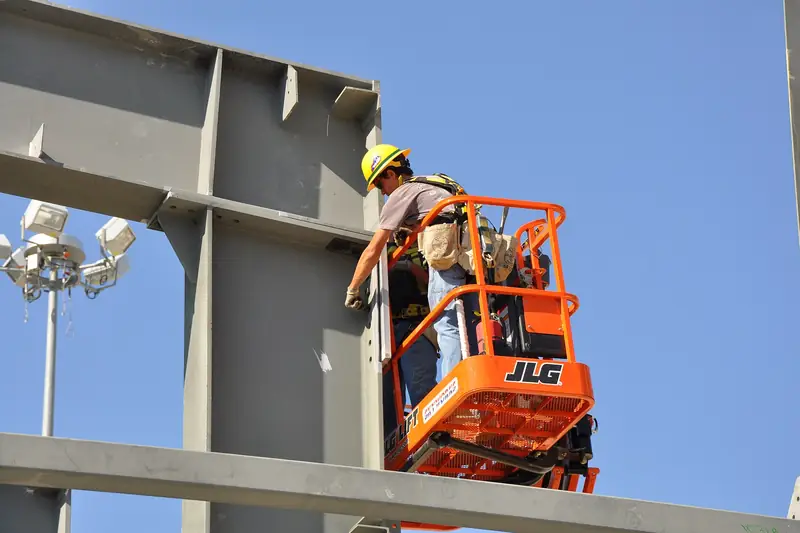
Photos: Bolting structural steel, PEO ACWA, CC BY 2.0. All photo credits.
