

Pipeline and pipelayers: the work, the crew, how to get on
Updated
The Good
Pipe crews work spread out and shoulder to shoulder until the line is in the ground. The ditch is no place to go it alone.
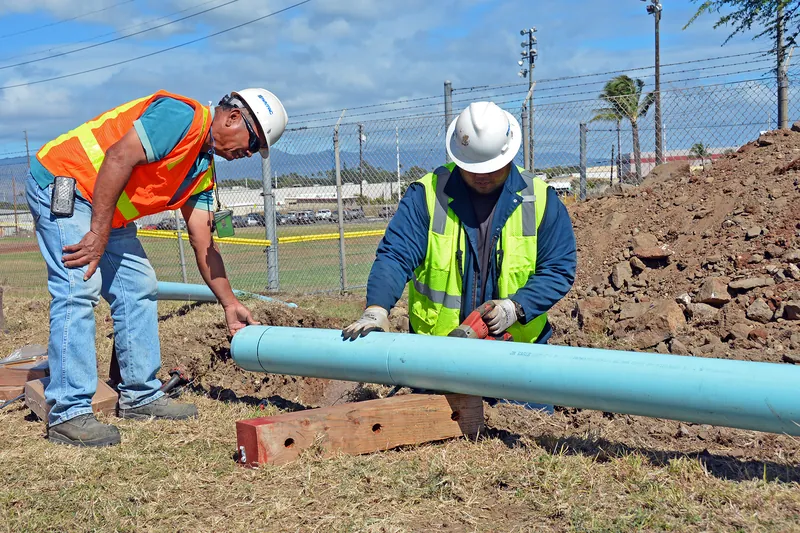
The BLS occupation counted on this page, pipelayers, is described by O*NET as laying pipe for storm or sanitation sewers, drains and water mains. For the other roles on a pipe crew, see the welding and heavy equipment pages.
- Pipelayers lay pipe for storm or sanitation sewers, drains and water mains. 2
- Employment is projected to decline (-1% or lower) from 2025 to 2035, with about 2,100 openings. 2
Is it for you?
You fit if you can live out of a truck or a motel for weeks and work in mud without complaint. Pipe crews move, and you move with them.
A day on the crew
A typical day as crews describe it. Every outfit runs its own way.
- Safety meeting on the right-of-way, then crews spread out along the line.
- Stringing: pipe laid out along the ditch, joint by joint.
- Welders, fitters and helpers work the joints while side booms hold the pipe.
- Coating crews check for holidays before the pipe goes in the ditch.
- Lower in, backfill and move the spread down the line.
Long hitches are part of pipe work. Plan the trips home before the job starts, not after.
The Brutal
Mud, ditches and long days when the weather turns. Greenhorns carry and learn before anybody hands over the tools, and per diem never replaces being home.
- 94% work outdoors in all weather every day and 22% report cramped or awkward work positions daily. 2
- 83% report a typical 40-hour work week. 2
Crew safety talks for this trade: trenching · struck-by. Free, with a printable sign-in sheet.
Greenhorn mistakes
- Climbing into a ditch that is not shored or sloped.
- Standing under a load on the side boom.
- Wandering off from your crew on the right-of-way.
Hard lessons
Pipeline humbles greenhorns with mud, distance and long days. The ones who stick learn by carrying and watching. Nobody is too good to carry skids for a season.
The Paycheck
U.S. pay, BLS OEWS May 2025 national estimatesOccupation · Median. Tap a row for the rest.
Pipelayers$49,000 ($23.56/hr)
- Median
- $49,000 ($23.56/hr)
- Bottom 10%
- $37,730
- Top 10%
- $80,170
- Jobs
- 33,050
- Code
- SOC 47-2151
Base wages 1
The spread: 10% of pipelayers earned under $37,730, 10% over $80,170 1 BLS does not publish starting pay, overtime or per diem, so neither do we. Get the rate and travel terms in writing.
How to Get In
Ask pipeline contractors and the local laborer or operator halls how they fill helper spots on a spread.
Crews hire who they know. Here is how to get known and get hired.
What the foreman wants to see
- You stay out of the ditch until it is safe.
- You keep up with the spread and do not need to be found.
- You learn the job ahead of yours and help when it is slow.
Before Monday, ask what the job needs: a license or permit, a safety card or site orientation, a drug screen. Gear: the Day One checklist.
- Under the gas pipeline rule, a covered task is an activity the operator identifies that is done on a pipeline facility, is an operations or maintenance task, is required by Part 192, and affects pipeline operation or integrity. 4
- Subpart N sets minimum operator qualification requirements for individuals who perform covered tasks. 5
- For hazardous liquid pipelines, Part 195 Subpart G uses the same four-part covered task test, with the activity required by Part 195. 6
- Part 199 requires operators of pipeline facilities subject to Parts 192, 193 or 195 to test covered employees for prohibited drugs and alcohol. 7
- A covered employee is a person who performs a covered function, including operator employees, contractors engaged by operators, and contractor employees. 8
The path to owning your own outfit
Pipeline is mostly large contractors. Some welders run their own rigs as subcontractors on a spread after years in the trade. The full steps are on crew to owner.
Jobsite words
- Spread
- The full pipeline crew working one section.
- Stringing
- Laying pipe joints out along the ditch.
- Holiday
- A gap or flaw in the pipe coating.
- Side boom
- A tractor with a boom that lifts and lowers pipe.
More in the jobsite words glossary.
Questions people ask
How many people work as pipelayers?
BLS OEWS counted 33,050 in May 2025 (data released May 15, 2026).
What training does it take?
Usually a high school diploma or GED with a few days to one year of on-the-job training. (source: O*NET OnLine: Pipelayers, Oct 6, 2026).
How much do pipelayers make?
BLS OEWS reported a May 2025 median of $49,000 a year, or $23.56 an hour, with the bottom 10% at $37,730 and the top 10% at $80,170 (data released May 15, 2026).
What do greenhorns get wrong?
Climbing into a ditch that is not shored or sloped. Standing under a load on the side boom. Wandering off from your crew on the right-of-way. You stay out of the ditch until it is safe.
Running a pipeline and pipelayers crew?
Featured hiring spots open soon; seekers apply straight to you.
Tell us you are hiringOther trades
Sources
- BLS OEWS, May 2025 data, released May 15, 2026
- O*NET OnLine: Pipelayers, page dated Oct 6, 2026
- BLS OEWS, May 2025: national mean and 90th percentile annual wage, May 2025 data, released May 15, 2026
- 49 CFR 192.801 (Subpart N, Operator Qualification), Cornell LII, checked Nov 19, 2026
- 49 CFR 192.801, Cornell LII, checked Nov 19, 2026
- 49 CFR 195.501 (Subpart G, Operator Qualification), Cornell LII, checked Nov 19, 2026
- 49 CFR 199.1 Scope, Cornell LII, checked Nov 19, 2026
- 49 CFR 199.3 Definitions, Cornell LII, checked Nov 19, 2026
Estimates, not promises. Rules change; check with the employer and the agency.
Photos: Water main crew, Pearl Harbor-Hickam, NAVFAC, Public domain. All photo credits.
