

Heavy equipment: the work, the crew, how to get on
Updated
The Good
Move the mountain one pass at a time. Operators grade the road, dig the ditch and clear the site, and the rest of the crew builds on what they leave behind.
- Operators drive, maneuver or control the heavy machinery used to construct roads and similar projects. 3
The work keeps coming: BLS projects employment to grow 4.6% from 2025 to 2035, with about 39,200 openings a year 2
Is it for you?
You fit if you can sit in a seat all day and stay sharp, and you like seeing dirt become a road. Smooth hands on the sticks come from seat time, not from talking.
A day on the crew
A typical day as crews describe it. Every outfit runs its own way.
- Start with the walkaround: fluids, tracks or tires, lights, horn and anything leaking.
- The foreman or grade checker shows you the stakes and what the cut or fill is for the day.
- You work the machine one pass at a time, watching the stakes, the grade and the ground crew.
- A spotter guides you near trenches, utilities and other machines.
- Shut down, grease points, clean the cab glass and park where the next shift expects it.
Roads, pads and ditches an operator cuts stay for years. Drive your kids past one someday and tell them you built it.
The Brutal
Long days in the seat, dust, mud and noise, and a ground crew you always have to keep track of. A moment of inattention costs somebody else.
- Operators work even in unpleasant weather, and pile driver operators have one of the highest injury and illness rates of all occupations. 3
- Most work full time, some over 40 hours a week, and some work in remote locations on large projects. 3
Crew safety talks for this trade: struck-by · trenching. Free, with a printable sign-in sheet.
Greenhorn mistakes
- Skipping the walkaround because the machine ran fine yesterday.
- Losing track of the ground crew inside the swing radius.
- Digging before utilities are marked through 811.
Hard lessons
Every operator has a dent or a gouge that taught him to slow down. A good foreman cares more about what you do the day after than about the mistake itself. Own it, report it and earn the seat back.
The Paycheck
The spread: 10% of operating engineers and other construction equipment operators earned under $42,190, 10% over $101,090 1 BLS does not publish starting pay, overtime or per diem, so neither do we. Get the rate and travel terms in writing.
U.S. pay, BLS OEWS May 2025 national estimatesOccupation · Median. Tap a row for the rest.
Operating engineers and other construction equipment operators$59,850 ($28.78/hr)
- Median
- $59,850 ($28.78/hr)
- Bottom 10%
- $42,190
- Top 10%
- $101,090
- Jobs
- 478,090
- Code
- SOC 47-2073
Base wages 1
Where the pay runs highest
Top five states by median wage, BLS OEWS May 2025State · Median · vs U.S. median. Tap a row for the rest.
Hawaii$115,860 · +94%
- Median
- $115,860
- vs U.S. median
- +94%
- Jobs
- 2,380
Illinois$97,740 · +63%
- Median
- $97,740
- vs U.S. median
- +63%
- Jobs
- 12,290
New Jersey$89,660 · +50%
- Median
- $89,660
- vs U.S. median
- +50%
- Jobs
- 5,980
California$87,160 · +46%
- Median
- $87,160
- vs U.S. median
- +46%
- Jobs
- 36,020
Washington$81,700 · +36%
- Median
- $81,700
- vs U.S. median
- +36%
- Jobs
- 10,290
Of 51 ranked 1
How to Get In
Many operators start as laborers on a dirt crew and earn seat time on slow days. Ask the site contractors who needs a hand.
Crews hire who they know. Here is how to get known and get hired.
What the foreman wants to see
- You never swing without knowing where everyone is.
- You read the stakes and ask when you do not understand them.
- The machine is greased and clean at the end of the day.
Before Monday, ask what the job needs: a license or permit, a safety card or site orientation, a drug screen. Gear: the Day One checklist.
- A high school diploma or equivalent is typically required; some learn through a 3- or 4-year apprenticeship. 3
- Operators often need a commercial driver's license to haul their equipment. 3
Apprenticeship sponsors
DOL lists 101 sponsors matched to this trade by name, most in New York 10, Illinois 8, Maryland 8, Pennsylvania 7, California 5. A place to start calling, not a job count 6
The path to owning your own outfit
Owner-operators often start with one machine and a truck and trailer to haul it. The machine payment and insurance come every month whether the work does or not, so count the cost first. BLS puts the self-employed share of operating engineers and other construction equipment operators at 2.3% in 2025 5. The full steps are on crew to owner.
Jobsite words
- Walkaround
- The pre-shift inspection of the machine.
- Grade stake
- A marked stake showing how much to cut or fill.
- Swing radius
- The area a machine's upper body can sweep. Nobody belongs in it.
- 811
- The national call-before-you-dig number to get underground utilities marked.
More in the jobsite words glossary.
Questions people ask
How many people work as operating engineers and other construction equipment operators?
BLS OEWS counted 478,090 in May 2025 (data released May 15, 2026).
What training does it take?
BLS lists the typical entry education as high school diploma or equivalent and the typical training as moderate-term on-the-job training (Employment Projections 2025-35).
How much do operating engineers and other construction equipment operators make?
BLS OEWS reported a May 2025 median of $59,850 a year, or $28.78 an hour, with the bottom 10% at $42,190 and the top 10% at $101,090 (data released May 15, 2026).
What do greenhorns get wrong?
Skipping the walkaround because the machine ran fine yesterday. Losing track of the ground crew inside the swing radius. Digging before utilities are marked through 811. You never swing without knowing where everyone is.
Running a heavy equipment crew?
Featured hiring spots open soon; seekers apply straight to you.
Tell us you are hiringOther trades
Sources
- BLS OEWS, May 2025 data, released May 15, 2026
- BLS Employment Projections 2025-35, 2025-35 projections
- BLS Occupational Outlook Handbook: Construction Equipment Operators, page dated Oct 29, 2026
- BLS OEWS, May 2025: national mean and 90th percentile annual wage, May 2025 data, released May 15, 2026
- BLS Employment Projections Table 1.2, percent self-employed, 2025 data
- U.S. DOL Office of Apprenticeship partner sponsors, trades-core release Nov 4, 2026
Estimates, not promises. Rules change; check with the employer and the agency.
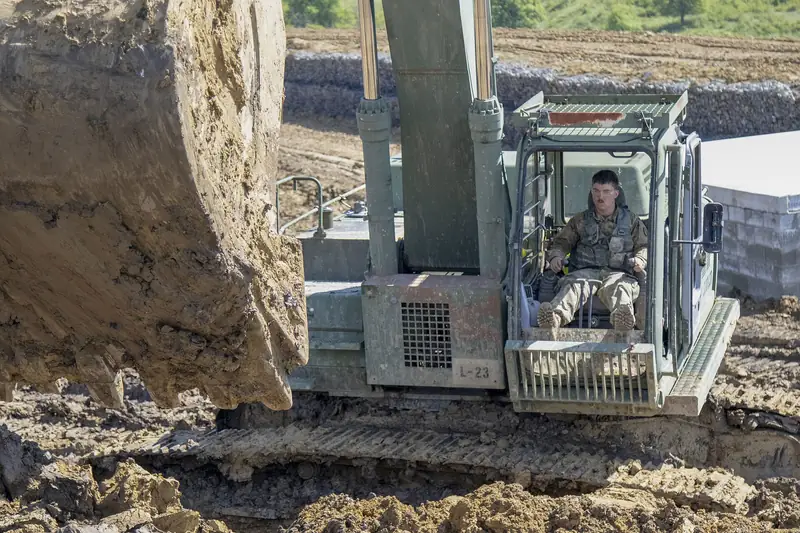
Photos: Excavator in deep mud, U.S. Army National Guard photo by Pfc. Grace Nechanicky, Public domain. All photo credits.
