

HVAC: the work, the crew, how to get on
Updated
The Good
When the heat quits in January or the air quits in July, somebody climbs into the attic or onto the roof. That somebody is the crew we respect.
- HVAC technicians install, maintain and repair heating, cooling and refrigeration systems. 3
The work keeps coming: BLS projects employment to grow 10.9% from 2025 to 2035, with about 40,600 openings a year 2
If you served
Military jobs that map here 5
- Army MOS: 91C Utilities Equipment Repairer; 12K Plumber
- Navy rating: UT Utilitiesman; EN Engineman
- Air Force AFSC: 3E1X1 Heating, Ventilation, Air Conditioning, and Refrigeration
- Marine Corps MOS: 1161 Refrigeration and Air Conditioning Technician; 1164 Utilities Systems Technician
- Coast Guard rating: MK Machinery Technician
- Space Force SFSC: 3E1X1 Heating, Ventilation, Air Conditioning, and Refrigeration
Is it for you?
You fit if you like fixing things and driving to a new problem every few hours. Attic heat and ladder work are part of it, and so is explaining the bill to a customer.
A day on the crew
A typical day as crews describe it. Every outfit runs its own way.
- The dispatcher or the lead hands out calls. Summer and winter, the list is long.
- First stop is a no-cool. Check the thermostat, the filter and the breaker before you chase anything harder.
- Install days mean setting a condenser, running a lineset and hanging an air handler in an attic.
- Every new system gets a vacuum pulled and held before refrigerant goes in.
- Last call of the day may be the hardest. You finish it, write it up and restock the van.
When a house is too hot for a baby or too cold for an old man, the tech who shows up matters, and the crew knows it.
The Brutal
Rooftops in July, attics in August, no-heat calls in the dead of winter. You carry the gear up the ladder yourself.
- They may work in cramped spaces, outdoors or in extreme temperatures. 3
- The page says HVAC technicians have one of the highest rates of injuries and illnesses of all occupations. 3
- Most work full time with possible evening or weekend shifts, and may be on call for emergencies. 3
Crew safety talks for this trade: ladders · heat stress. Free, with a printable sign-in sheet.
Greenhorn mistakes
- Stepping between the joists in an attic and coming through the ceiling.
- Skipping the vacuum to save time.
- Replacing a part before checking the simple stuff.
Hard lessons
Every tech has a callback that hurt his pride. The honest ones go back, find what they missed and tell the customer the truth. That honesty is what earns repeat calls and the shop's trust.
The Paycheck
The spread: 10% of heating, air conditioning, and refrigeration mechanics and installers earned under $40,050, 10% over $95,210 1 BLS does not publish starting pay, overtime or per diem, so neither do we. Get the rate and travel terms in writing.
U.S. pay, BLS OEWS May 2025 national estimatesOccupation · Median. Tap a row for the rest.
Heating, air conditioning, and refrigeration mechanics and installers$61,010 ($29.33/hr)
- Median
- $61,010 ($29.33/hr)
- Bottom 10%
- $40,050
- Top 10%
- $95,210
- Jobs
- 409,670
- Code
- SOC 49-9021
Base wages 1
Where the pay runs highest
Top five states by median wage, BLS OEWS May 2025State · Median · vs U.S. median. Tap a row for the rest.
District of Columbia$84,390 · +38%
- Median
- $84,390
- vs U.S. median
- +38%
- Jobs
- 400
Alaska$77,430 · +27%
- Median
- $77,430
- vs U.S. median
- +27%
- Jobs
- 610
Illinois$77,410 · +27%
- Median
- $77,410
- vs U.S. median
- +27%
- Jobs
- 9,740
Massachusetts$77,300 · +27%
- Median
- $77,300
- vs U.S. median
- +27%
- Jobs
- 8,200
Connecticut$76,610 · +26%
- Median
- $76,610
- vs U.S. median
- +26%
- Jobs
- 3,800
Of 51 ranked 1
How to Get In
Service companies often start new hires riding along with a senior tech. Ask whether they help with the EPA refrigerant card. Want to work on big cooling plants? DataCenterSkilledTrades.com covers the mechanical side of data center work.
Crews hire who they know. Here is how to get known and get hired.
What the foreman wants to see
- You check the basics first and explain what you found in plain words.
- You stay on the joists and put down a board when you need one.
- Your van is clean and stocked at the end of the shift.
Before Monday, ask what the job needs: a license or permit, a safety card or site orientation, a drug screen. Gear: the Day One checklist.
- Technicians typically need a postsecondary nondegree award, though some enter with less education; apprenticeship is another route. 3
- Nearly all HVAC technicians must be certified in refrigerant handling, and some states and localities require licenses. 3
Apprenticeship sponsors
DOL lists 2,315 sponsors matched to this trade by name, most in New Jersey 368, Connecticut 275, Rhode Island 203, New Hampshire 188, Iowa 147. A place to start calling, not a job count 7
The path to owning your own outfit
HVAC owners usually start with a state contractor license and the EPA refrigerant certification techs need to handle refrigerant. Many start as a one-van service shop and grow from referrals. BLS puts the self-employed share of heating, air conditioning, and refrigeration mechanics and installers at 6.3% in 2025 6. The full steps are on crew to owner.
Jobsite words
- Lineset
- The pair of copper lines that carry refrigerant between the units.
- Pull a vacuum
- Remove air and moisture from the system before charging it.
- Superheat
- A temperature reading techs use to judge refrigerant charge.
- No-cool
- A service call where the air conditioning is not cooling.
More in the jobsite words glossary.
Questions people ask
How many people work as heating, air conditioning, and refrigeration mechanics and installers?
BLS OEWS counted 409,670 in May 2025 (data released May 15, 2026).
What training does it take?
BLS lists the typical entry education as postsecondary nondegree award and the typical training as long-term on-the-job training (Employment Projections 2025-35).
How much do heating, air conditioning, and refrigeration mechanics and installers make?
BLS OEWS reported a May 2025 median of $61,010 a year, or $29.33 an hour, with the bottom 10% at $40,050 and the top 10% at $95,210 (data released May 15, 2026).
What do greenhorns get wrong?
Stepping between the joists in an attic and coming through the ceiling. Skipping the vacuum to save time. Replacing a part before checking the simple stuff. You check the basics first and explain what you found in plain words.
Running a hvac crew?
Featured hiring spots open soon; seekers apply straight to you.
Tell us you are hiringOther trades
Sources
- BLS OEWS, May 2025 data, released May 15, 2026
- BLS Employment Projections 2025-35, 2025-35 projections
- BLS Occupational Outlook Handbook: Heating, Air Conditioning, and Refrigeration Mechanics and Installers, page dated Oct 29, 2026
- BLS OEWS, May 2025: national mean and 90th percentile annual wage, May 2025 data, released May 15, 2026
- O*NET OnLine Military Crosswalk, vintage Oct 30, 2026
- BLS Employment Projections Table 1.2, percent self-employed, 2025 data
- U.S. DOL Office of Apprenticeship partner sponsors, trades-core release Nov 4, 2026
Estimates, not promises. Rules change; check with the employer and the agency.
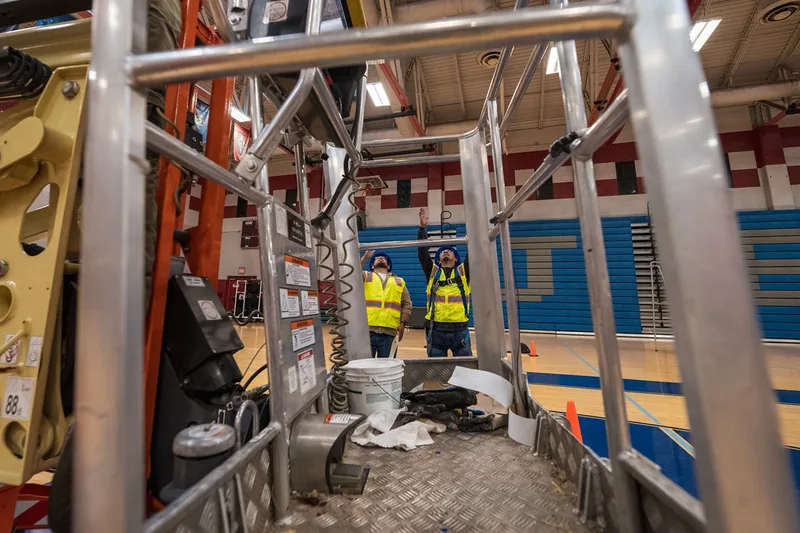
Photos: HVAC techs, Fort Sam Houston, Texas, Taylor Curry, U.S. Air Force (Joint Base San Antonio), Public domain. All photo credits.